FIELD NOTES: 24th JUNE 2026
3xTL at Assembly Point
BY WILLOW BERZIN
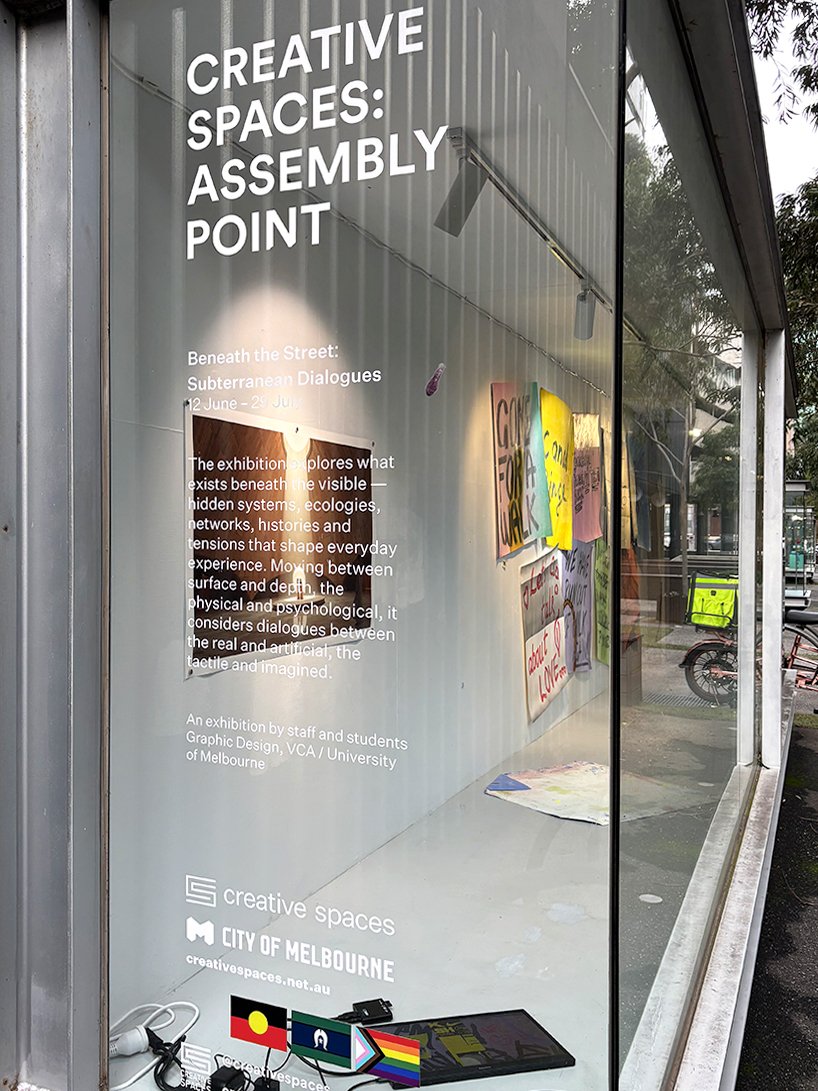
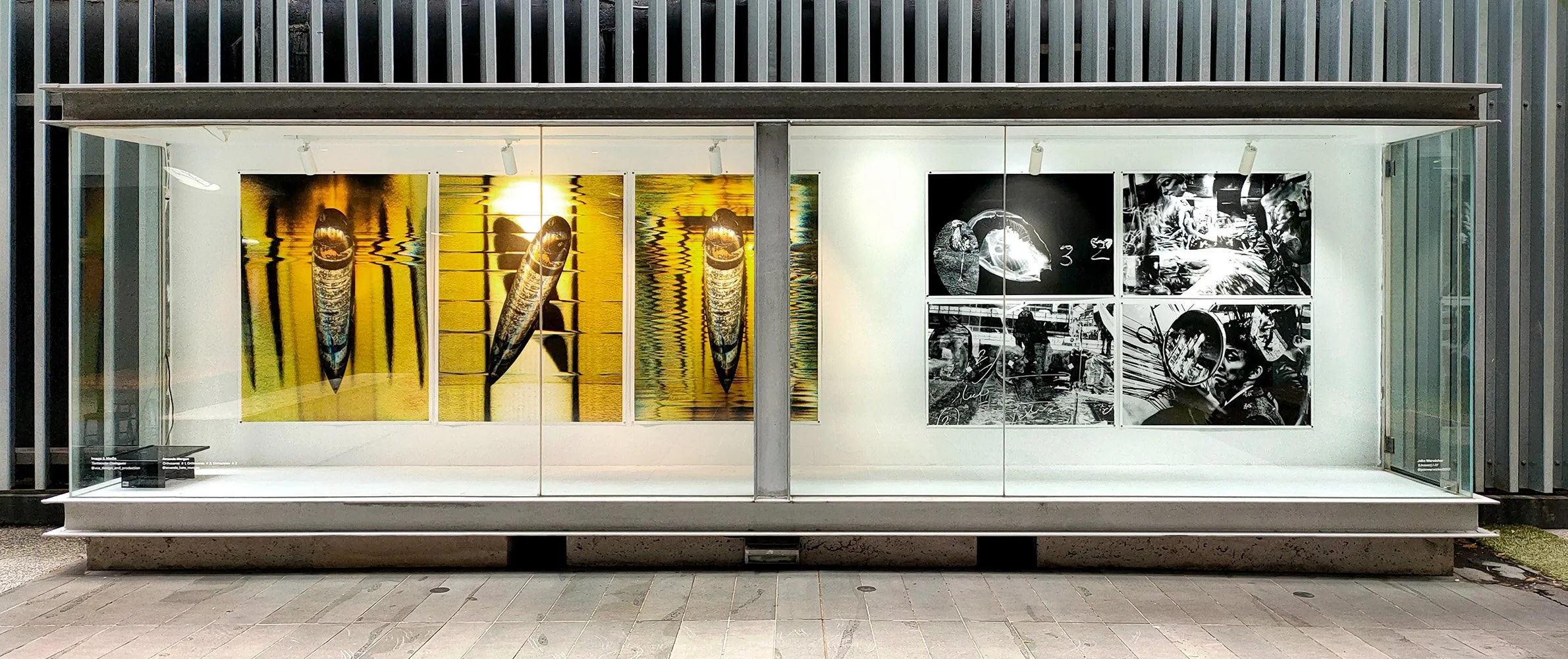
3xTL is part of a new group exhibition at Assembly Point, Beneath the Street: Subterranean Dialogues, on until 29th July. Presented by Design & Production at VCA, University of Melbourne, it brings together staff and student work exploring what exists beneath the visible: hidden systems, ecologies, networks, histories, and tensions that shape everyday experience. It's in the vitrines opposite Godot in Southbank, open 24 hours, seven days a week.
The exhibition moves through photography, scanning, mapping, drawing, painting, textile work, interactive projects, moving image, and AI-generated imagery, holding dialogues between the real and artificial, the tactile and the imagined. I'm showing alongside Kate Beynon & Rali Beynon / TudoFAM, Peter Burke, Karen Ann Donnachie & Andrea (Andy) Simionato, David McBurney, Amanda Morgan, John Warwicker, and Emile Zile, with video highlights from the Image & Media studio.
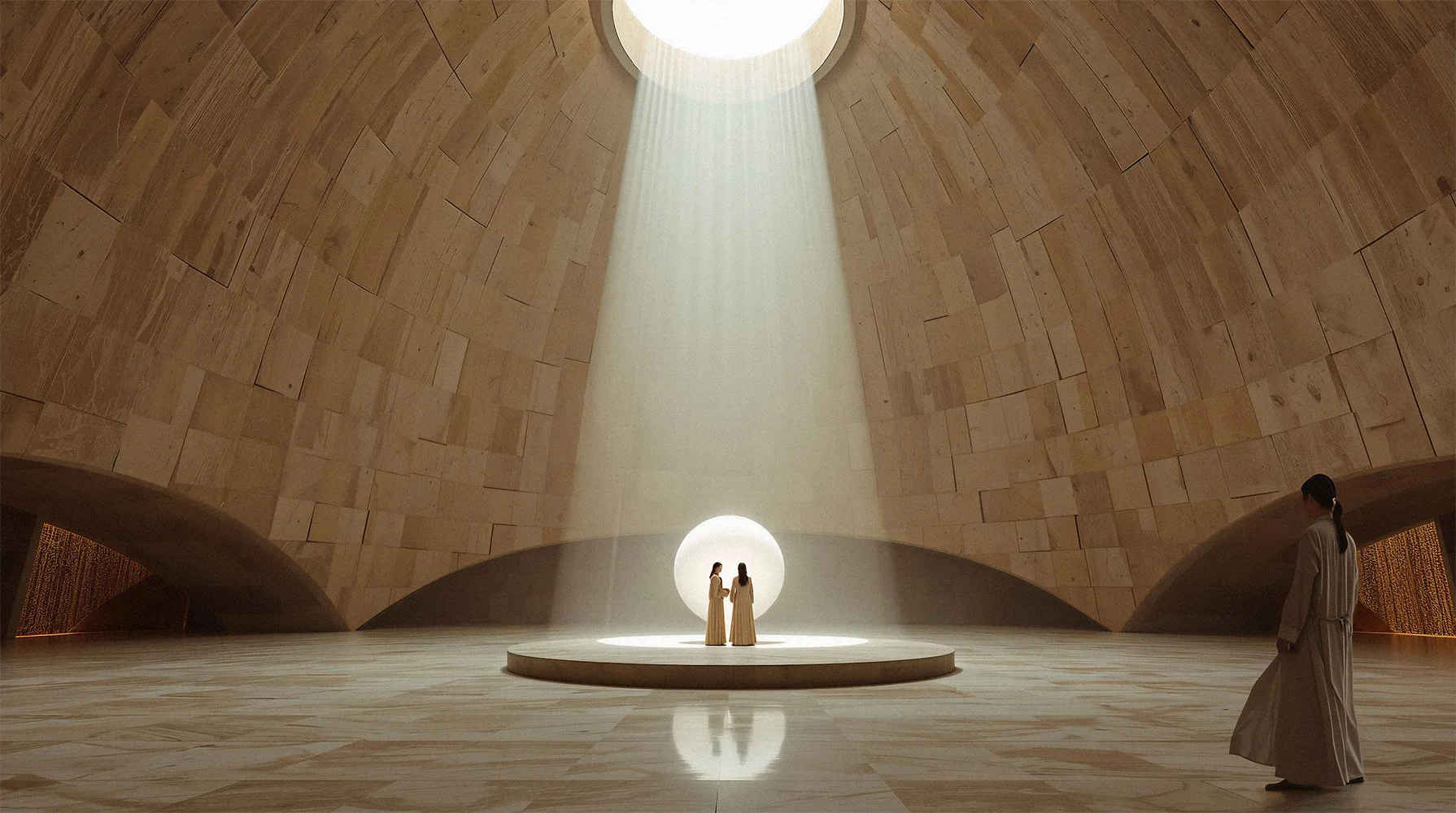
My piece takes the same question 3xTL asks in its workshops, what does your preferred future feel and look like, and turns it toward a speculative vision for Nautilus Wellbeing Intelligence. As a single still image of Nautilus imagined as a spatial experience, the way a workshop participant might imagine their own future, envisaged as a place you can walk into and dialogue with.
It's a small, quiet piece next to some genuinely bold site-responsive work from people I deeply respect. I haven't exhibited in a long time. Putting something up next to this group of extraordinary artists and designers was daunting. Exactly the nudge I needed.
Of course now I want to do more of it. Especially this: exhibiting the visions that 3xTL participants imagine, out in public where others can find themselves in them.
FIELD NOTES: 1st JUNE 2026
Reflecting on: Imagining a Better World, Melbourne Design Week, 2026
BY WILLOW BERZIN
It was a little bit scary, and a little bit magical.
Scary because I hadn’t held in-person workshops quite like this before, and because I knew what I was being entrusted with.
Having moved through similar visioning experiences myself, I know that once these moments are genuinely felt, they don’t go away. They live within us.
Holding that container for others is both humbling and, yes, a little frightening. The responsibility is not something to hold lightly. Magical for exactly the same reason.
Three sessions across Melbourne Design Week at Kathleen Syme Library and Community Centre, drawing on a simple but demanding premise: that most of us carry a vivid, felt sense of the world we actually want to live in, and almost never get the time or space to articulate it. Participants moved through sensing, writing and seeing. Stillness and breath, imaginations activated, capturing it in words, then something I hadn’t been able to offer before: a visualised image of their own preferred future, generated in the room, to take home.
Some feedback, when it came, was unsolicited and stopped me in my tracks: “It made me realise how giving design, especially participatory design, can be. I loved how the session was so personal / individual, yet connected. It was a very heartening and powerful experience to be part of.”
And from another participant: “I have my photo up in my study. It was so good to imagine what’s possible.”
Twenty-two visions came out of those sessions. From a clifftop on Thunggutti Country to a beach in Penang, from a learning hub in Naarm / Melbourne, to a misty morning in the Dandenong Ranges, from a suburban street in Preston where the few shared cars are electric and not a brand name in sight, to a balcony in Wurundjeri Country where flying foxes stream across the dusk sky and inside, for the first time in a long time, someone feels safe.
Reading across all of them, something becomes clear that no single vision could carry alone. People are not imagining a radically different world. They are imagining this world, slowed down enough to notice it be more itself. The deepest, most consistent desire isn’t new technology, better policy or even justice, though those are present. It is time. Time to walk slowly, tend a garden, sit by water, notice the birds. And belonging. Nobody imagined fame or wealth. They imagined enough, and then, more specifically, each other. The picnic table on the corner, the shared lunch, children laughing and playing on the street, a sister close by, the community song and dance in the fading light of the day.
Nature is not backdrop in any of these visions. It is protagonist. Named species, specific creeks, returning animals. People remembering themselves as part of Nature, integrated, more porous, more accountable. And almost entirely absent; status, screens, individual wealth, career ambition, growth for its own sake. Nobody imagined being a billionaire. They imagined being more present, in safe and peaceful communities.
In the second session, one participant looked at me as they were leaving and asked: “is this good AI?”. In a moment when artificial intelligence feels to many people extractive, accelerating uncertainty and fear, something in that room felt like the opposite. Technology in service of imagination. Of discernment and slowness. Of a person’s specific, irreplaceable sense of what a our preferred lives feel like.
I’ve come to think of the process as a kind of time travel. Tapping open imagination, stepping forward into alternate timelines and possible futures, then taking a photograph of it to bring back to the now. What happens next, whether it shifts something in how a person moves through the present towards that clearer destination, that I remain curious to design for.
There is more to do before this chapter closes; some refinements to the offering, participants to receive their edited written narratives and visualised visions, publishing these to the Vision Library, a survey still to gather their reflections, and a synthesis beyond my own interpretation alone.
What I hope is that participants carry this with them - the felt and knowing sense of the future they reached toward. And in that knowing, perhaps our preferred futures are not as far away as we think.
The Birrarung / Yarra River was at the table with us. And that changes something.